Steps for Troubleshooting Faulty Garage Door Sensors in Los Angeles
Faulty garage door sensors are among the leading causes an automatic garage door fails to work properly. If your garage door won’t close, the opener light flashes, or the door reverses automatically, the safety sensors may be dirty, misaligned, damaged, or affected by a wiring problem.
Los Angeles conditions can make sensor issues more likely. Dry, dusty air can cover the lenses, while coastal areas such as Santa Monica, Venice, and Long Beach expose brackets, connectors, and wiring to salt-laden air. The good news is that a few simple inspections are safe for homeowners. However, electrical work, spring repairs, and complex garage door opener problems should be handled by a qualified garage door technician.
What Faulty Garage Door Sensors Do
Most modern automatic garage doors use garage door safety sensors mounted near the bottom of each vertical track. These devices are often called photo eye sensors. One sensor sends an infrared safety beam to the other, creating a protected path across the garage door opening.
If the beam is interrupted, the garage door opener should prevent the door from closing or should activate its automatic reversal system. This helps protect children, pets, vehicles, and property from being trapped beneath the door.
The sensors do not usually lift or lower the door themselves. Instead, they work with the opener’s control system. A problem with the beam, sensor position, sensor wiring, or opener circuit can make the system treat an unobstructed opening as dangerous.
Common Signs Your Sensors Need Garage Door Repair
The most common symptom is that the garage door won’t close using the remote. It may move down a few inches and then go back to the open position. In other cases, the opener activates, but the door does not move at all.
- Flickering sensor lights: One or both sensor indicators may flash instead of showing a steady light.
- The door reverses: The door reverses automatically after starting to close, even though nothing is in the way of the opening.
- Remote control failure: The remote may not close the door, while the wall control works differently.
- Intermittent operation: The door works at some times of day but fails when sunlight hits one sensor.
- Wall control response: Holding the wall button may allow the door to close temporarily, which often shows that the safety circuit is detecting a fault.
A blinking sensor light does not always mean the sensor itself has failed. It can indicate poor sensor alignment, a blocked safety beam, loose garage door wiring, or a damaged sensor wire. A proper diagnosis should evaluate the entire circuit before recommending replacement.
Why Garage Door Sensors Fail
Improperly positioned sensors are a typical reason for failure. A bump from a stored item, broom, bicycle, trash bin, or vehicle can move a sensor slightly out of position. Even a small change may stop the infrared beam from reaching the opposite unit.
Dust and buildup can also obstruct the beam. Los Angeles’s dry, dusty conditions are especially relevant because fine dust can collect on the sensor lenses and make the safety system unreliable. Spider webs, leaves, and garage storage materials may cause similar problems.
Damaged wiring is another possibility. Staples, accidental impacts, rodents, age, and moisture can harm the low-voltage wires running from the opener to the sensors. In older homes and detached garages in Los Feliz, Highland Park, Pasadena, and the San Fernando Valley, deteriorating opener wiring and non-original components may contribute to recurring sensor faults.
Solar interference can affect some photo eye sensors. Direct afternoon sunlight shining into the receiving sensor may overwhelm the infrared signal. This can account for why the door works in the morning but will not close later in the day.
Coastal conditions also need consideration. In Santa Monica, Venice, and Long Beach, salt-laden air may speed up corrosion on sensor brackets, connectors, and exposed wiring. Corrosion can create intermittent faults that are difficult to identify without testing the connections.
Safe Sensor Troubleshooting Prior to Calling a Technician
Before requesting garage door repair, keep people, pets, vehicles, and loose objects away from the door. Do not override the safety system or force the door closed. Use these essential garage door opener troubleshooting steps:
- Check whether anything is interfering with the safety beam, including boxes, tools, cobwebs, or stored items.
- Inspect the sensor lenses and gently clean them with a soft, dry or slightly damp cloth. Do not use abrasive cleaners or apply liquid spray directly into the housing.
- Look at the indicator lights. A steady light on both units often shows that the beam is aligned, while a blinking light may suggest a problem.
- Confirm that the sensors are pointing toward one another at the same height.
- Check visible low-voltage wires for obvious cuts, loose connections, or damage without opening electrical housings.
- Perform a power cycle by unplugging the garage door opener briefly, then reconnecting it. Follow the manufacturer’s instructions if the opener has a reset procedure.
- Complete a garage door safety test after the door operates normally.
For the safety test, place a solid object designed for testing beneath the door’s path and attempt to close the door using the remote. The door should move back when it contacts the object. Also test the safety beam according to the opener manufacturer’s instructions. If the door does not reverse correctly, stop using it and arrange a safety inspection.
How to Reposition Overhead Garage Door Sensors
To check sensor alignment on an overhead garage door, first identify the small sensor units near the bottom of the tracks. They are usually attached to the vertical supports with metal or plastic sensor brackets.
Look from one sensor toward the other. The units should face directly across the opening and sit at approximately the same height. If one has shifted, carefully loosen the bracket fastener just enough to make a small adjustment. Do not bend the track or use force against the sensor housing.
Move the unit until both indicator lights stay solid. Tighten the bracket without moving the sensor, then check the door. If the light continues blinking, the issue may involve wiring, corrosion, a failed sensor, or the opener’s control board rather than simple sensor alignment.
When You Shouldn’t Repair the Sensors Yourself
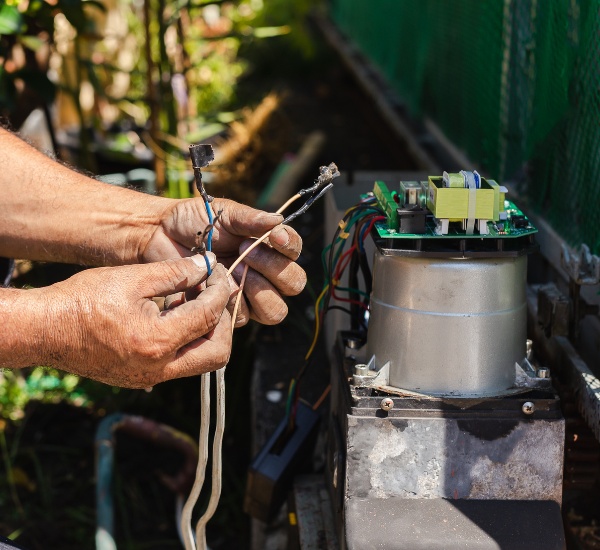
Stop diagnosing the problem and contact a trained professional if you see damaged electrical wiring, burnt connectors, exposed conductors, or corrosion inside a connection. Although sensor circuits are generally low voltage, improper repairs can damage the opener or defeat the safety system.
Never tamper with, remove, or replace garage door springs as part of a sensor repair. Springs are under considerable tension and can cause severe injury if handled without the proper tools and training. Also stay clear of hinges, rollers, cables, and other hazardous pinch areas while testing the door.
If the door is crooked, unusually heavy, noisy, or difficult to lift manually, the sensors may not be the primary problem. A garage door technician can inspect the complete system, including the tracks, cables, springs, opener, and door balance.
Garage door repair Cost for Defective Sensors
The complete garage door repair cost for malfunctioning sensors depends on whether the issue is dirt, alignment, wiring, or a failed component. A minor adjustment or cleaning may be included in a service visit, while replacement photo eyes or wiring repairs add parts and labor.
When comparing garage door repair pricing in Los Angeles, ask whether the quote includes diagnosis, travel, labor, parts, testing, and removal of old components. A service call fee may apply even if the repair is declined. Some companies apply that fee toward approved work, while others do not.
The replacement sensor cost can vary by opener brand and whether compatible sensors are available separately. Using the right replacement pair is important because sensors must communicate properly with the opener. A technician should test the safety beam and automatic reversal after installation rather than simply installing parts and leaving.
For precise Los Angeles garage door repair pricing, request a written garage door repair estimate before work begins. Avoid choosing a provider solely because an online price appears unusually low; unclear service fees or additional charges may increase the final bill.
What Determines the Final Repair Price
The garage door opener model affects sensor compatibility and parts availability. Older openers may require specific components or have discontinued sensors. If the opener has a failing logic board, replacing sensors alone may not solve the problem.
Wiring damage can increase the labor required because the technician may need to trace the circuit, replace sections of cable, secure the wires, or repair corroded connectors. In coastal areas, corrosion may make a basic sensor replacement more involved.
Labor rates vary across Los Angeles based on location, scheduling, technician experience, and job complexity. A same-day service or emergency garage door repair appointment may cost more than a routine visit during https://lagatemaintenanceservice1-101-101-10.theburnward.com/garage-door-repair-in-los-angeles-ca-local-service-and-cost-guide regular business hours. Ask about arrival fees, after-hours charges, warranty terms, and the complete written quote before authorizing work.
If Sensor Problems Indicate a Larger Garage Door Issue
Frequent sensor failures can be a symptom of a larger problem. A damaged garage door panel may move the tracks or create vibration that knocks sensors out of alignment. A door that is uneven or binding can also place excess strain on the opener and cause unusual reversal behavior.
When the door is heavy, uneven, or difficult to move, have a technician check the springs and cables. Searching for “ garage door spring replacement near me” may help locate a provider, but make sure that the company is properly licensed, insured, and experienced with your door type.
Ask for a detailed explanation before approving spring work. The garage door spring cost depends on the spring type, door weight, number of springs, access, and labor. Sensor replacement should not be used as a replacement for correcting a dangerous spring or balance problem.
If the door has extensive structural damage, severe rust, repeated failures, or obsolete components, repair may not be the most cost-effective option. Compare the expected repair cost with the garage door replacement cost. For a standard two-car opening, ask specifically for the 2 car garage door replacement cost and the two car garage door replacement cost, including installation, disposal, tracks, hardware, and opener compatibility.
Choosing Garage Door Repair Near Me in Los Angeles
When searching for garage door repair near me, hire a certified garage door contractor that provides complete information before dispatching a technician. Verify the company’s Los Angeles service area, including whether it reaches your area, detached garage, or nearby community.
EM Garage Doors And Gate Service Inc19629 Cantara St, Reseda, CA 91335
(818) 919-0785
https://emgaragedoorsandgateservice.com/
https://maps.app.goo.gl/XujLWxA4pAQKARQT8
34.2193569, -118.5613022
Before booking Los Angeles garage door repair, find out:
- Is the technician licensed, properly covered, and familiar with your opener brand?
- What is the service call fee and trip fee?
- Will the company provide a formal estimate before repairs commence?
- What warranty applies to parts and labor?
- Is same-day garage door service available, and does it carry an separate charge?
- Will the technician perform a complete safety review after the repair?
A reliable provider should clarify whether the problem is sensor alignment, cleaning, a damaged sensor wire, replacement photo eyes, or an opener fault. Be wary of anyone who promptly advises a complete door or opener replacement without testing the safety beam and related components.
Garage Door Sensor Care Tips
Routine garage door maintenance can minimize sensor troubles. Perform a monthly inspection of both units, checking that they remain securely mounted and face each other. Keep boxes, tools, landscaping materials, and other objects clear of the sensor path.
Use a soft cloth for regular lens cleaning. In dry, dusty parts of Los Angeles, clean the lenses more often if visible dust builds up. In Santa Monica, Venice, and Long Beach, inspect brackets and connectors for rust or corrosion and ask a technician about suitable weather protection for exposed components.
Do not paint over the sensor lenses, cover the units with plastic, or use tape as a permanent repair. Keep wiring secured away from moving door parts, but do not staple or reroute electrical wiring unless you understand the manufacturer’s requirements.
Include the sensors in your broader proactive maintenance plan. Lubricating the correct moving parts, checking door balance, observing unusual noises, and scheduling periodic professional inspections can spot problems before they become an emergency garage door repair situation.
Questions and Answers
How do I know whether my garage door sensors are defective?
Common signs include blinking sensor lights, a garage door that won’t close, a door that reverses automatically, and a remote that fails while holding the wall button allows temporary operation. Clean the sensor lenses, check for obstructions, and verify sensor alignment. If one light remains off or blinks after these checks, the system may need sensor replacement, wiring repair, or professional testing.
How much does garage door repair cost for faulty sensors in Los Angeles?
The garage door repair cost varies according to the service call, diagnosis, labor, parts, wiring condition, opener model, and scheduling. A simple alignment may cost less than replacing damaged wiring or both sensors. Request a detailed garage door repair estimate and written quote that identifies the service call fee, replacement parts, labor, warranty, and any same-day service charge.
Can I install new garage door sensors without professional help?
Some property owners can install new compatible sensors if the work involves only mounting the units and using the manufacturer’s instructions. However, sensor replacement may not correct damaged wiring, corrosion, or an opener control problem. Do not work near springs, cables, or pinch points, and always check the safety beam and reversal function after installation. A garage door technician should handle questionable electrical connections.
Why does my garage door close when I hold down the wall button but not with the remote?
Holding the wall button may bypass the normal remote closing command when the opener detects a safety sensor fault. This behavior often points to misaligned sensors, dirty lenses, sunlight interference, a damaged sensor wire, or failed photo eye sensors. It is not a lasting repair and should not be used to bypass the safety system. Have the sensors and opener circuit inspected.
When should a sensor problem lead to garage door opener replacement or full garage door repair?
Consider broader garage door repair when sensor faults continue after cleaning, alignment, and confirmed wiring repairs, or when the opener is obsolete, repeatedly fails, or has a damaged control board. Full repair may also be necessary if the door is unbalanced, has a damaged panel, broken springs, worn cables, or track problems. Compare the garage door opener installation cost and garage door replacement cost with continued repairs, and obtain a professional safety inspection before making a decision.