Ways to Repair a Sagging Garage Door in Los Angeles
A drooping garage door is not just a visual problem. An misaligned door can put additional strain on the garage door opener, cause the rollers to bind, and leave the door unable to close securely. In Los Angeles, a sagging overhead garage door may result from worn springs, loose cables, damaged panels, or track alignment problems.
Some adjustments are simple, but components under high tension can cause major injuries if handled incorrectly. The most secure approach is to identify the likely cause, stop using the door if it is unstable, and arrange an inspection with a qualified garage door technician. This guide explains frequent causes, safety steps, garage door repair options, and pricing considerations for homeowners throughout Los Angeles County.
What Causes a Garage Door to Tilt?
A garage door can sag because one or more parts are no longer supporting the door uniformly. In a sectional garage door, each garage door panel is joined with hinges, rollers, and brackets. If a hinge becomes loose or a panel bends, one side may sit lower than the other.
Aged or broken garage door springs are another common cause. Garage door springs counterbalance the weight of the door so the opener does not have to lift the entire load. A damaged torsion spring, which is mounted above the door, may cause the door to feel unusually heavy. An extension spring system, typically located along the horizontal https://telegra.ph/Common-Questions-About-Garage-Door-Repair-in-Los-Angeles-08-30-2 tracks, can also stretch, break, or lose tension.
Garage door cables deliver spring force to the door. Frayed, loose, or displaced garage door cables can make one side rise sooner than the other, creating a drooping garage door. Cables should not be adjusted carelessly because they may be under considerable tension.
Problems with garage door tracks can also cause a slanted or uneven door. Bent tracks, loose mounting hardware, dirt, or poor track alignment may prevent the rollers from moving smoothly. Over time, the door can bind, scrape, or stop partway through its travel.
Los Angeles County’s generally moderate, year-round climate does not remove wear. Occasional heat exposure can degrade weatherstripping, lubricants, and door materials. In coastal communities such as Santa Monica, Long Beach, and Redondo Beach, salt air may increase corrosion on springs, cables, rollers, hinges, and other metal hardware.
Identifying a Sagging Overhead Garage Door
Conduct a visual inspection while the overhead garage door is fully closed. Stand at a short distance and compare the space between the bottom of the door and the garage floor. If one corner is higher, the door may be unbalanced or out of alignment.
Look at the seams between sections and check whether they remain relatively straight. A bowed section, separated hinge, or displaced roller can indicate a structural problem. Also inspect the garage door tracks for visible bends, gaps, or loose bolts. Do not place your hands near moving rollers or cables.
If the door appears stable, you can disconnect the garage door opener using the manual release and carefully test whether the door can be lifted by hand. A properly functioning door should move smoothly and remain near the halfway position without rapidly falling or rising. This is a basic door balance test, not a spring adjustment procedure.
Do not force the door if it is heavy, crooked, or stuck. A garage door opener is designed to guide a balanced door, not compensate for a failed spring or damaged cable. Continuing to operate the opener may burn out the motor or worsen the damage.
EM Garage Doors And Gate Service Inc19629 Cantara St, Reseda, CA 91335
(818) 919-0785
https://emgaragedoorsandgateservice.com/
https://maps.app.goo.gl/XujLWxA4pAQKARQT8
34.2193569, -118.5613022
Typical Indicators of Door Imbalance
- An uneven garage door has one side lower than the other when closed.
- A binding garage door hesitates, catches, or rubs against the tracks.
- Door gaps appear along the sides, between sections, or beneath the bottom seal.
- A noisy garage door makes grinding, popping, scraping, or unusually loud rattling sounds.
- The door reverses unexpectedly or stops before reaching the floor.
- The garage door opener strains, vibrates, or operates more slowly than usual.
These symptoms can overlap. For example, a broken garage door spring may make the opener appear defective, while a track problem may create a noise that sounds like a spring failure. A professional safety inspection can distinguish between balance, alignment, and opener problems.
Is It Safe to Use a Uneven Garage Door?
A sagging door is not automatically about to collapse, but it should be considered a serious safety hazard. Garage door safety depends on properly working springs, cables, tracks, rollers, hinges, photo-eye sensors, and the opener’s reversing system. If any of these parts fail, the door may fall, move unpredictably, or pin an object.
Do not operate the door if a torsion spring is visibly broken, a cable has slipped from its drum, a panel is badly bent, or the door is hanging at an angle. Keep children, pets, and vehicles away from the opening. If the door is open and unsteady, do not stand underneath it or attempt to pull it down.
An extension spring can also be dangerous when it breaks or becomes disconnected. These springs may move violently along the tracks. Never remove, or reconnect a spring without the proper tools and training.
A garage door cable may look simple, but it can be tightly loaded even when the door is closed. Cable replacement and spring work should be handled by a trained professional. If you must make the area safe, switch off the opener’s power and avoid touching the tension hardware. For a door that will not close or is blocking a vehicle, use emergency garage door service rather than attempting a temporary repair.
Garage Door Repair for a Slumping Door
Garage door repair starts with determining the source of the sag. A technician may inspect the door sections, hinges, rollers, tracks, cables, springs, opener, safety sensors, and mounting points. The repair plan should resolve the underlying balance problem instead of simply forcing the door back into position.
Common solutions include garage door spring replacement, garage door cable repair, roller replacement, hinge replacement, and track adjustment. Track adjustment may fix a minor alignment issue, but severely bent or corroded tracks usually need replacement. The technician should also check that the opener’s force and travel settings are appropriate after the mechanical repair.
A proper repair estimate should list the failed parts, explain the recommended work, and separate labor and parts. Ask whether the work includes a balance test, safety sensor test, lubrication, and final operating inspection.
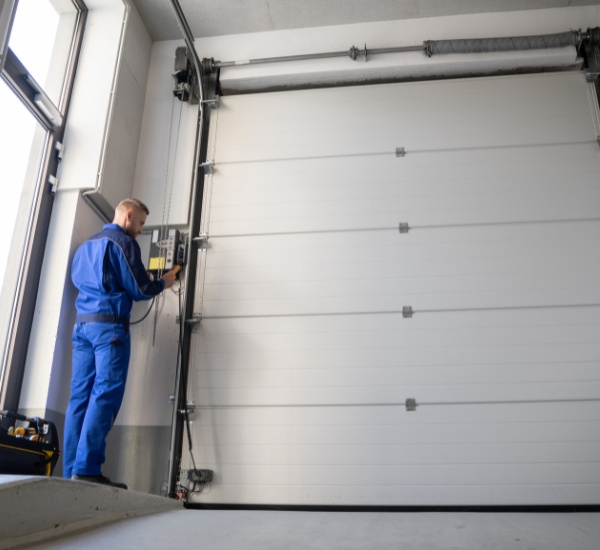
When a Garage Door Panel Needs Repair or Replacement
A garage door panel may be repaired when the damage is small and the structure remains straight. Minor dents, loose hinges, or limited surface damage can sometimes be corrected without replacing the entire section. However, a bent garage door panel can disrupt the rollers and cause the door to sag repeatedly.
A cracked panel, split stile, crushed section, or badly warped panel generally requires garage door panel replacement. On a sectional garage door, replacing one section may be practical if the replacement corresponds to the existing dimensions, design, color, and insulation level.
Panel replacement is less suitable when several sections are damaged, the original model is discontinued, or the remaining door has extensive rust and wear. A mismatched replacement can alter the door’s appearance and balance. The technician should inspect the hinges and tracks after installing a new door panel because hidden damage may have led to the original failure.
Reasons Spring and Cable Repairs Need a Professional
A torsion spring holds significant energy while the door is closed and open. Torsion spring replacement demands specialized winding bars, precise spring sizing, and correct tension. Choosing the wrong spring can leave the door too heavy, too light, or unsafe to operate.
Extension spring replacement also demands attention to spring length, weight rating, safety cables, and track configuration. A professional must ensure that both sides are matched and installed correctly. Garage door cables need similar care because incorrect routing or tension can cause the cable to come off the drum.
Homeowners often look for “garage door spring replacement near me” when a spring breaks. A nearby provider can be handy, but distance should not be the only choosing factor. Look for a certified garage door technician who explains the repair, carries proper replacement parts, and provides written warranty terms.
The garage door spring cost varies with the spring type, door weight, access, number of springs, and local labor. A reputable garage door repair technician should not push you into replacing unrelated components. Ask for an itemized repair estimate before work begins.
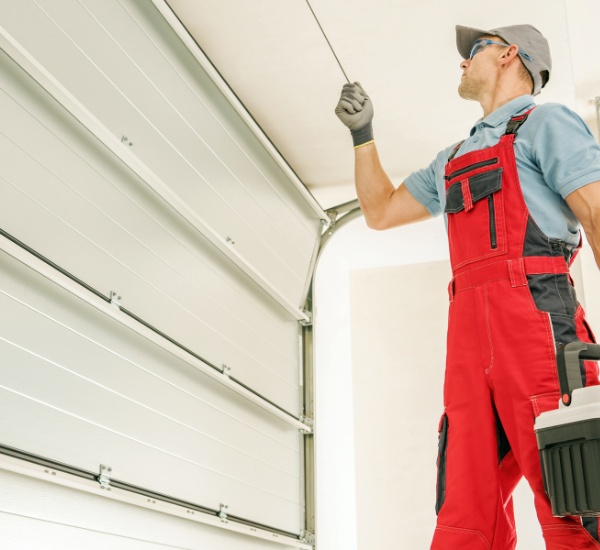
Garage door repair Cost and Pricing in Los Angeles
The garage door repair cost for a drooping door often differs substantially. A simple hinge, roller, or minor track adjustment may cost less than a repair involving springs, cables, or multiple damaged sections. Because each door has different hardware and weight, a trustworthy garage door repair pricing quote normally requires an inspection.
A service call fee may apply even if you accept the repair. Ask whether the fee covers troubleshooting, travel, or part of the labor. Pricing may also be higher outside normal hours, especially for emergency garage door repair in areas such as Downtown Los Angeles, the San Fernando Valley, the Westside, or South Bay communities.
Spring work often costs more than basic adjustments because it requires specialist work and safety procedures. The garage door spring cost may include one or two springs, end bearing checks, cable inspection, lubrication, and a balance test. A low starting estimate may not include damaged drums, worn rollers, or other parts discovered during the inspection.
Factors That Affect Sagging Door Repair Pricing
- Door size: A one-car door usually requires less material and labor than a wide two-car door.
- Door weight: Heavy wood, insulated steel, and custom doors need correctly rated springs and hardware.
- Labor cost: Skilled spring and cable work generally costs more than a basic lubrication or minor adjustment.
- Replacement parts: Specialty rollers, tracks, hinges, cables, drums, and panels can raise the total.
- Access and condition: Corrosion, cramped spaces, and seized fasteners may make the work more time-consuming.
- Timing: Emergency garage door repair may include after-hours, weekend, or holiday charges.
Before approving work, request the total price, warranty coverage, payment terms, and any conditions that could change the quote. A written estimate is especially important when comparing companies across Los Angeles County.
Repairing Versus Garage Door Replacement Cost
The garage door replacement cost is usually more expensive than fixing one spring, cable, or panel, but replacement can be more economical when the door has multiple serious problems. Compare the cost of the immediate repair with the age, condition, safety, and future maintenance needs of the door.
Garage door panel replacement may be worthwhile when the rest of the door is in good condition and a matching section is available. If the door has multiple damaged sections, replacement hardware, deteriorated seals, and a failing opener, a replacement door may provide better long-term value.
Los Angeles homes commonly include both single-car and two-car garages. Accurate measurements are essential when comparing the 2 car garage door replacement cost with repair options. The phrase two car garage door replacement cost can refer to different widths, materials, insulation levels, window layouts, and installation conditions, so estimates should be based on the actual opening rather than a generic price.
When Replacing the Entire Garage Door Makes Sense
Replacing an old garage door may make sense when it has repeated repairs, widespread rust, warped sections, obsolete hardware, or poor safety performance. A replacement door can also improve insulation, operation, and appearance.
An insulated garage door may help regulate temperatures in an attached garage and reduce drafts through the opening. New weather seals and improved construction can be useful for homes exposed to Los Angeles heat. Better windows, finishes, and design choices may also improve curb appeal.
Replacement is not automatically the best answer for every sagging door. If the frame, tracks, panels, and opener are in good condition, a targeted garage door repair may restore safe operation at a lower cost. Ask the contractor to explain both options and identify which existing components can reasonably remain.
How to Choose Garage Door Repair Near Me in Los Angeles
When looking for garage door repair near me, begin with companies that clearly serve your Los Angeles neighborhood and adjacent service region. Confirm that the provider has experience with sagging sectional and overhead garage door systems, rather than just opener installations.
California homeowners should check contractor licensing, insurance, and business identification before making a choice. Ask for a written estimate that includes labor, parts, service call fee, taxes, and warranty terms. A local garage door company should be willing to explain whether the warranty covers springs, cables, panels, labor, or only selected components.
Check that the company sends a licensed garage door technician with suitable training and equipment. Be cautious of a provider that gives a very low phone quote without asking about door size, spring type, damage, or access. Also avoid high-pressure recommendations to replace the entire door before the cause of the sag has been documented.
For homes near Santa Monica, Long Beach, Redondo Beach, and other coastal locations, ask whether the proposed hardware is suitable for corrosion-sensitive conditions. Written documentation and clear warranty terms can help resolve problems later.
Preventing Future Garage Door Sagging
Regular garage door maintenance can lower the likelihood of imbalance and premature wear. Watch the door during operation and listen for changes in sound. A new scrape, pop, or grinding noise should be investigated before it becomes a major failure.
Keep garage door tracks clean and inspect them for loose fasteners or visible damage. Do not straighten tracks yourself or use household grease on every component. A qualified professional can apply the appropriate lubricant to hinges, bearings, springs, and garage door rollers. Roller lubrication helps reduce friction, but it will not repair a bent track or worn roller.
Inspect weatherstripping along the sides and bottom of the door. Damaged weatherstripping allows drafts, water, dirt, and pests into the garage and may stiffen from heat exposure. Replace it when it is cracked, flattened, or no longer seals evenly.
Check the opener’s reversal feature and photo-eye sensors according to the manufacturer’s instructions. Keep the sensor lenses clean and aligned. Do not disable safety features to make a misaligned door operate.
Schedule an annual inspection, particularly if the door is used frequently or is exposed to coastal air. Preventive maintenance can spot frayed cables, rusting springs, loose hinges, worn rollers, and deteriorating panels before they lead to a sudden failure. A safety inspection is also valuable after a storm, impact, renovation, or opener replacement.
Frequently Asked Questions
How much does garage door repair cost for a sagging door?
The garage door repair cost varies according to whether the problem involves a panel, hinge, roller, cable, spring, or track. Minor adjustments generally cost lower amounts than spring or cable work. In Los Angeles, the total may also include a service call fee, after-hours charges, door size, labor, and replacement parts. Request a written, itemized repair estimate before approving the work.
Can a sagging garage door be repaired, or does it need replacement?
Many sagging doors can be repaired by restoring the garage door balance, replacing worn springs or cables, adjusting tracks, or repairing one garage door panel. Replacement is more appropriate when the door has extensive structural damage, repeated repairs, severe corrosion, discontinued parts, or poor insulation. A technician should inspect the entire system before suggesting a replacement door.
How much does garage door spring replacement cost in Los Angeles?
The garage door spring cost depends on whether the system uses a torsion spring or extension spring, the door’s weight, the number of springs, labor, access, and related hardware. A quote may also include cable inspection, lubrication, and a balance test. Because spring sizing is safety-critical, review written estimates rather than choosing solely by the lowest price.
Should I search for garage door spring replacement near me or call a general repair company?
Search for a nearby company that specifically performs spring work and employs a licensed garage door technician. A general repair company may be suitable if it has documented experience with torsion spring replacement and extension spring replacement. Confirm licensing, insurance, parts coverage, labor warranty, and emergency availability before scheduling service.
What is the cost of a two-car garage door replacement cost compared with replacing a panel?
The two car garage door replacement cost is typically more expensive than garage door panel replacement because it includes a full door, necessary hardware, installation, and possibly replacement tracks or an opener. The final price depends on width, material, insulation, windows, design, and site conditions. Consider the 2 car garage door replacement cost with the age and condition of the existing door, plus the cost of ongoing repairs.
What is the garage door opener installation cost when a drooping door damages the opener?
Garage door opener installation cost depends on the opener type, horsepower, ceiling height, door weight, smart features, and whether new brackets or wiring are needed. The opener should not be replaced until the door is properly balanced and moves freely by hand. Installing a new opener on a sagging or binding door can damage the new motor and create another safety problem.